Nowruz 2582 (1402, 2023) began on:
با شاد باش نوروز - تحويل سال نو تحويل سال نو ۲۵۸۲ - ساعت ۰ و ۵۴ دقيقه
و ۲۸ ثانيه
صبح
سه شنبه
اول فروردين
۱۴۰۲ در ايران
Tehran:
Tuesday:
00:54:28 AM
March 21, 2023
Berlin
Monday
10:24:28 PM
March 20, 2023
Chicago:
Monday
04:24:28 PM
March 20, 2023
Dubai:
Tuesday
01:24:28 AM
March 21, 2023
London
Monday
09:24:28 PM
March 20, 2023
Los Angeles
Monday
02:24:28 PM
March 20, 2023
New York
Monday
05:24:28 PM
March 20, 2023
Sydney
Tuesday
08:24:28 AM
March 21, 2023
In harmony with the rebirth of nature, the Iranian New Year
Celebration, or NORUZ (NowRuz), always begins on the first day of spring.
Nowruz ceremonies are symbolic representations of two ancient concepts
- the End and the Rebirth; or Good and Evil.
A few weeks before the New Year, Iranians clean and rearrange their
homes. They make new clothes, bake pastries and germinate seeds as
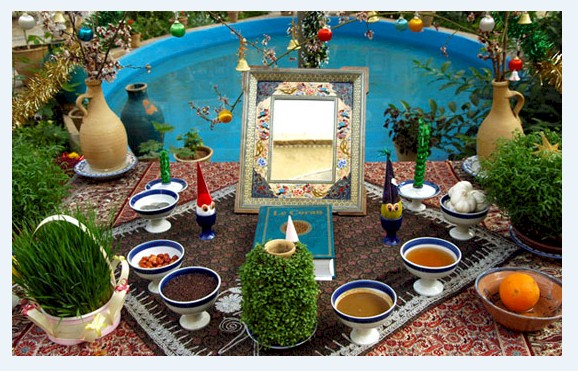
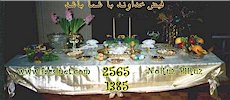
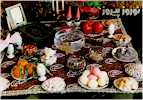
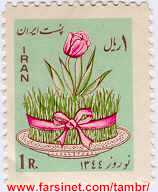
sign of renewal. The ceremonial cloth is set up in each household.
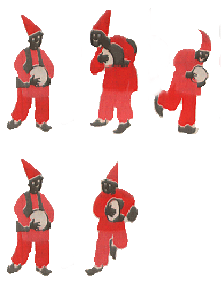
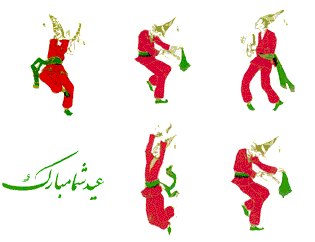
Troubadours, referred to as Haji Firuz,
disguise themselves with makeup
and wear brightly colored outfits of satin. These Haji Firuz, singing
and dancing, parade as a carnival through the streets with tambourines,
kettle drums, and trumpets to spread good cheer and the news of the
coming new year.
The origins of NoRuz are unknown, but they go back several thousand years
predating the Achaemenian Dynasty. The ancient Iranians had a festival called
"Farvardgan" which lasted ten days, and took place at the end of the solar
year. It appears that this was a festival of sorrow and mourning, signifying the end
of life while the festival of NoRuz, at the beginning of spring signified
rebirth, and was a time of great joy and celebration.
NowRuz - An everlasting tradition of Persia and its People ... - Persian Poetry
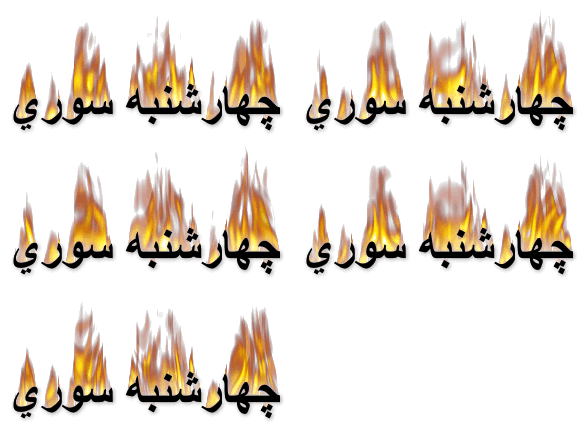
Chahar Shanbeh Suri -
چهارشنبه سوری
Last Wednesday of the year (Chahar Shanbeh Suri) :
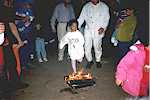
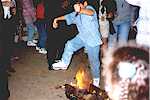
On the eve of last Wednesday of the year, literally the eve of Red
Wednesday or the eve of celebration, bonfires are lit in public places
with the help of fire and light, it is hoped for enlightenment and
happiness throughout the coming year.
People leap over the flames, shouting:
Give me your beautiful red color
And take back my sickly pallor!
Chahar Shanbeh Suri چهارشنبه سوری نوید دهندة
نوروز و فرا
رسیدن فصل
بهار
The other ancient symbolic representation of NoRuz is based around
the idea of the triumph of good over evil. According to the Shah-nameh
(The Book of Kings), the national Iranian epic by Ferdowsi, NoRuz came
into being during the reign of the mythical King Jamshid; when he defeated the evil
demons (divs) seizing their treasures, becoming master of everything but the heavens
and bringing prosperity to his people. To reach the heavens, Jamshid ordered a throne
to be built with the jewels he had captured. He then sat on the throne and commanded
the demons to lift him up into the sky. When the sun's rays hit the throne, the sky was
illuminated with a multitude of colours. The people were amazed at the King's power and
they showered
him with even more jewels and treasures. This day of great celebration was named NoRuz,
and was recognised as the first day of the year.
"Baharan" - Spring Time - Persian Music Video by Sarah from "Message of Love" Album
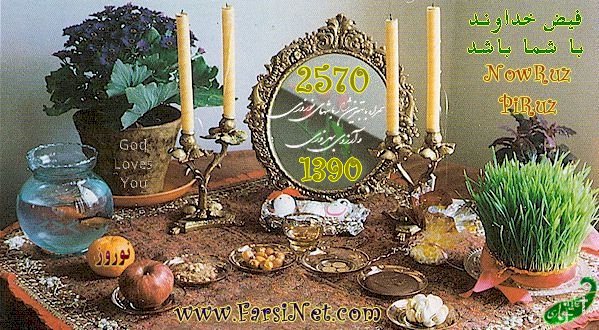
Nowruz 2570 (1390) will begin on:
با شادباش نوروز - تحويل سال نو تحويل سال نو ۲۵۷۰ - ساعت ۲ و ۵۱ دقيقه
و ۰۰ ثانيه صبح دوشنبه اول فروردين ۱۳۹۰
در ايران
Tehran:
Monday:
02:51:00 AM
March 21, 2011
New York:
Sunday
07:21:00 PM
March 20, 2011
Chicago:
Sunday
06:21:00 PM
March 20, 2011
Denver:
Sunday
05:21:00 PM
March 20, 2011
Los Angeles:
Sunday
04:21:00 PM
March 20, 2011
London:
Sunday
11:21:00 PM
March 20, 2011
Paris:
Monday
00:21:00 AM
March 21, 2011
Rome:
Monday
00:21:00 AM
March 21, 2011
Berlin:
Monday
00:21:00 AM
March 21, 2011
Athens:
Monday
01:21:00 AM
March 21, 2011
Jerusalem:
Monday
01:21:00 AM
March 21, 2011
Moscow:
Monday
02:21:00 AM
March 21, 2011
Kuala Lumpur:
Monday
07:21:00 AM
March 21, 2011
Tokyo:
Monday
08:21:00 AM
March 21, 2011
Sydney:
Monday
10:21:00 AM
March 21, 2011
UTC/GMT:
Sunday
11:21:00 PM
March 20, 2011
Chahar Shanbeh Suri
Last Wednesday of the year (Chahar Shanbeh Suri) :
On the eve of last Wednesday of the year, literally the eve of Red
Wednesday or the eve of celebration, bonfires are lit in public places
with the help of fire and light, it is hoped for enlightenment and
happiness throughout the coming year.
People leap over the flames, shouting:
Give me your beautiful red color
And take back my sickly pallor!
Chahar Shanbeh Suri چهارشنبه سوری نوید دهندة
نوروز و فرا
رسیدن فصل
بهار
With the help of fire and light symbols of good, we hope to see our way
through this unlucky night - the end of the year- to the arrival of
springs longer days.
Traditionally, it is believed that the living were visited by the
spirits of their ancestors on the last day of the year. Many people
specially children, wrap themselves in shrouds symbolically reenacting
the visits. By the light of the bonfire, they run through the
streets banging on pots and pans with spoons called Gashog-Zani to
beat out the last unlucky Wednesday of the year, while they knock on
doors to ask for treats. Indeed, Halloween is a Celtic variation of
this night.
In order to make wishes come true, it is customary to prepare special
foods and distribute them on this night. Noodle Soup a filled Persian
delight, and mixture of seven dried nuts and fruits, pistachios,
roasted chic peas, almond, hazelnuts, figs, apricots, and raisins.
Fal-Gush
This is another ritual in which someone makes a wish and stands
at the corner of an intersection , or on a terrace or behind a wall.
That person will know his fortune when he overhears conversation of a
passerby.





 ]
]






 .....
.....